
Over the last year, the bar for what effective B2B marketing looks like has moved.
You see it in how buyers now discover information, how they decide which brands they trust and how marketing teams are expected to prove their value internally. These pressures show up in day-to-day decisions, as well as long-term planning.
Across technical sectors like food and nutrition, pharma and advanced materials, the challenge is consistent: standing out in a sea of sameness, building credibility faster and making every investment count.
This piece explores three strategic questions worth pressure-testing as you plan for the year ahead.
1. How are you building authority and trust in an AI world?
Generative AI platforms like Gemini, Perplexity and ChatGPT have changed how B2B buyers search, research and make decisions. And lots of them are doing it without ever clicking through to a website. As a result, the discoverability game has changed. It’s no longer just about ranking but being recognised and trusted. While your website remains the anchor, authority is assessed across the full ecosystem of your owned brand touchpoints. To become the answer on large language models (LLMs), B2B brands must become an authoritative voice in their fields. To achieve this, brands need to demonstrate hands-on experience, specialised expertise, recognised authority and trustworthiness – collectively known as EEAT.
Let’s dive a little deeper:
Showcasing a deep understanding and hands-on involvement in your field
- Leverage experts and people with first-hand experience
- Use results-driven case studies where possible
- Use your own original images and video content
- Include direct quotes from practitioners and subject matter experts
- Leverage personal stories and narratives
Demonstrating your specialised knowledge or skills
- Use author bios with credentials for articles and blogs
- Embed fresh statistics and charts
- Use data and evidence – AI favours concrete, verifiable numbers
- Site reputable third-party studies
- Host live Q&A sessions with your subject matter experts
Becoming a recognised and reliable source of information
- Cite authoritative sources in your content
- Include quotes from authoritative industry bodies or recognised leaders
- Improve your About Us page, include awards and accreditations if possible
- Contribute to well-regarded discussions in the field
Creating reliable and dependable content
- Demonstrate basic business trust factors (clear contact details, legal pages, transparency)
- Keep your content fresh and accurate
Recency is also becoming increasingly important. As AI systems assess credibility through signals such as accuracy, context and clarity, reviewing and updating your content regularly helps sustain visibility and trust over time.
The strategic challenge is no longer how to optimise for individual channels but how consistently your brand earns authority and trust across the environments that shape perception and decision-making today. We explore the content and SEO implications of AI-driven search in more detail in a separate blog, which looks at what this shift means in practice.
2. How are you maintaining your human touch?
In an AI-centric, post-pandemic world, human connection has become a powerful trust signal. The trade shows we attended in 2025 – including Vitafoods Europe, CPHI Frankfurt and Fi Europe – reflected this, with record attendance and a renewed focus on community-led formats. Yet many show floors were still dominated by generic messaging and interchangeable visuals. A missed opportunity in a market craving credibility.
In a world of automation, it’s the people behind the brand – their expertise, perspective and lived experience – that create real distinction. In-person conversations, expert visibility and familiar faces build confidence in ways no digital interaction can replicate.

This human presence shouldn’t stop at events. PR and earned media play a critical role in extending trust beyond the stand or stage. Thoughtful interviews, informed commentary, behind-the-scenes stories and candid narratives offer a more authentic window into how expertise is built and applied. They replace polished marketing with credibility and that relatability matters in high-consideration B2B decisions.
Strategic content still has a role to play, particularly formats designed for dialogue rather than broadcast. Expert-led panels, Q&As, customer case studies and community engagement create space for two-way exchange. While B2B brands sell to organisations, buying decisions are still made by people. And people want to feel heard, understood and confident in who they’re buying from. Treating human connection as a strategic investment, rather than just a moment of engagement means being deliberate about where presence, expertise and dialogue create the greatest impact on trust and decision-making.
3. Can you prove your value in the boardroom?
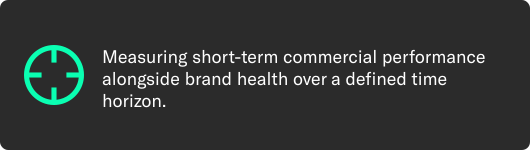
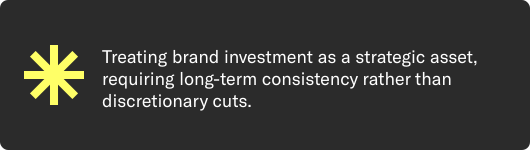
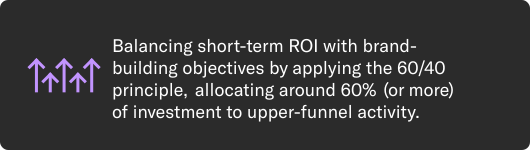
B2B marketers face a constant tug-of-war between short-term sales targets and long-term brand health. In 2026, AI is making it easier to track and optimise performance metrics but this creates a growing risk that we over-index on Return of Investment (ROI) and underinvest in Value of Investment (VOI) – the cumulative brand value that marketing creates over time. In complex B2B categories, trust, credibility and brand reputation play a decisive role in purchase decisions. Yet these factors rarely show up in short-term metrics, making them easier to overlook than they should be.
Leading organisations are building long-term value by:

In board discussions:
Reframe marketing performance from campaign results to business risk and future value. Instead of leading with short-term ROI alone, anchor conversations around questions like:
What happens if we stop investing in brand for 12 months?
Where does future demand come from?
How confident are we in our share of preference next year?
This shifts marketing from a cost to be justified to an asset that protects sustainable growth.
Final thought: Turning insight into advantage
These three questions point to a bigger truth: 2026 is a focus year.
AI will continue to influence how buyers discover and assess brands, but trust, credibility and human judgement remain the decisive factors in complex B2B decisions. The marketers who succeed will be those who resist short-term distraction and instead invest in authority, distinctive presence and long-term value creation. 2026 isn’t about doing more. It’s about doing the right things, consistently. Balancing performance with brand health, technology with humanity and measurement with meaning. Get that balance right and marketing moves from a short-term growth lever to a strategic asset in the boardroom.
If you want to pressure-test your 2026 marketing approach with people who work at the intersection of strategy, creativity and complex B2B markets every day, we’d be happy to talk.